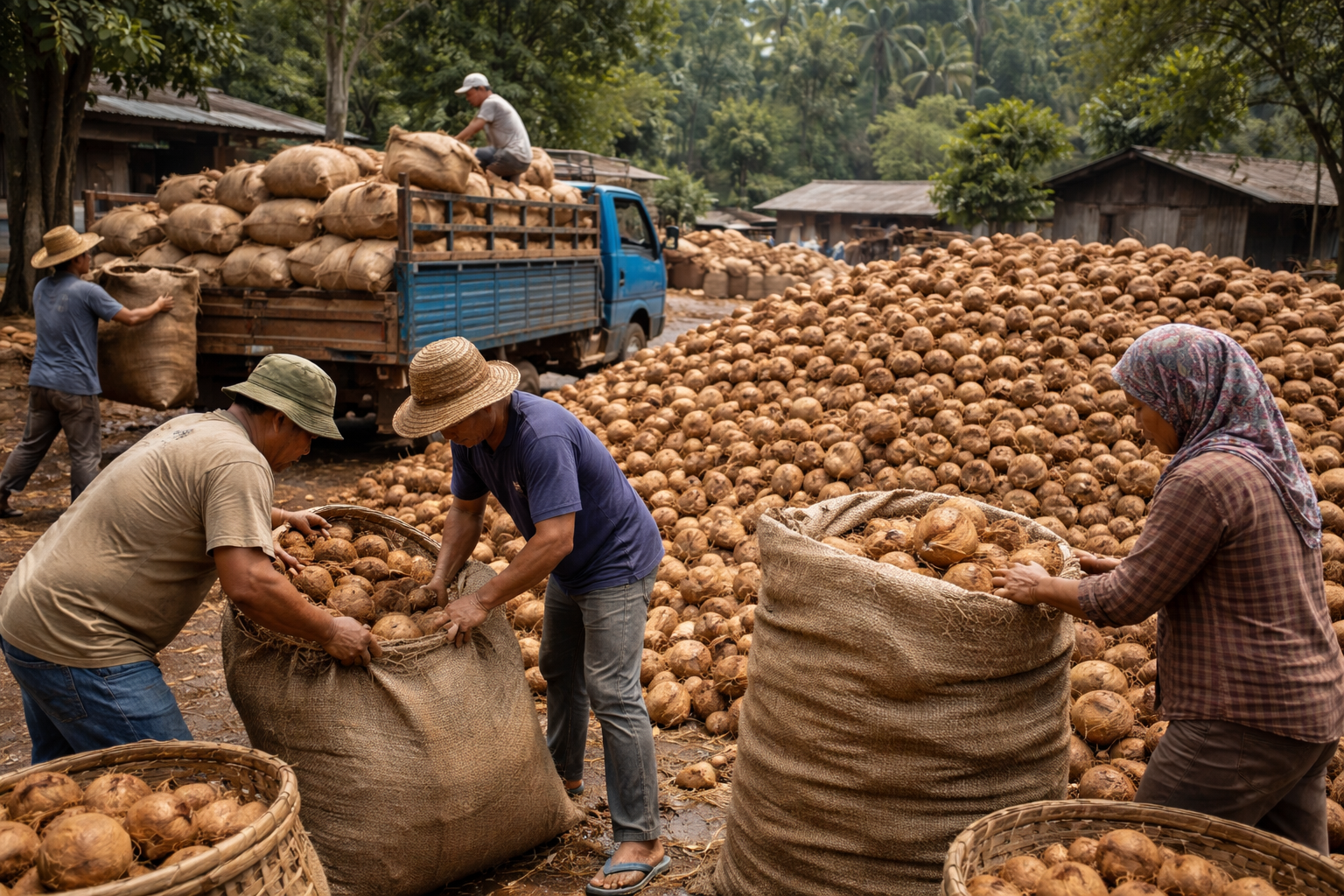
Aggregating shells from local farmers
We aggregate, process, and supply premium, fully mature raw coconut shells from Indonesia. Properly sun-dried and cleaned, our shells are the ideal raw material for activated carbon manufacturing, charcoal briquettes, and biomass energy.
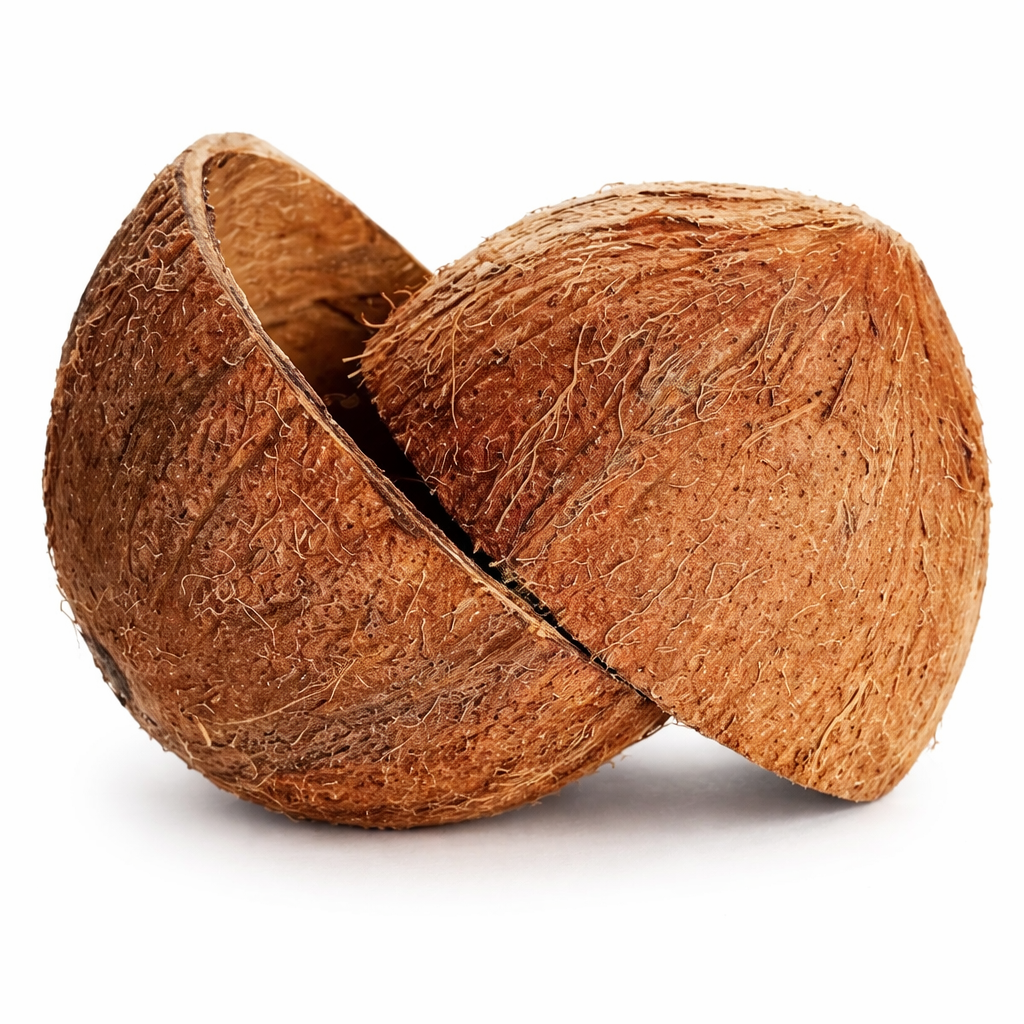
Supplying high-quality coconut shells requires strict sorting to ensure only fully mature, thick, and low-moisture shells make it into our export containers.
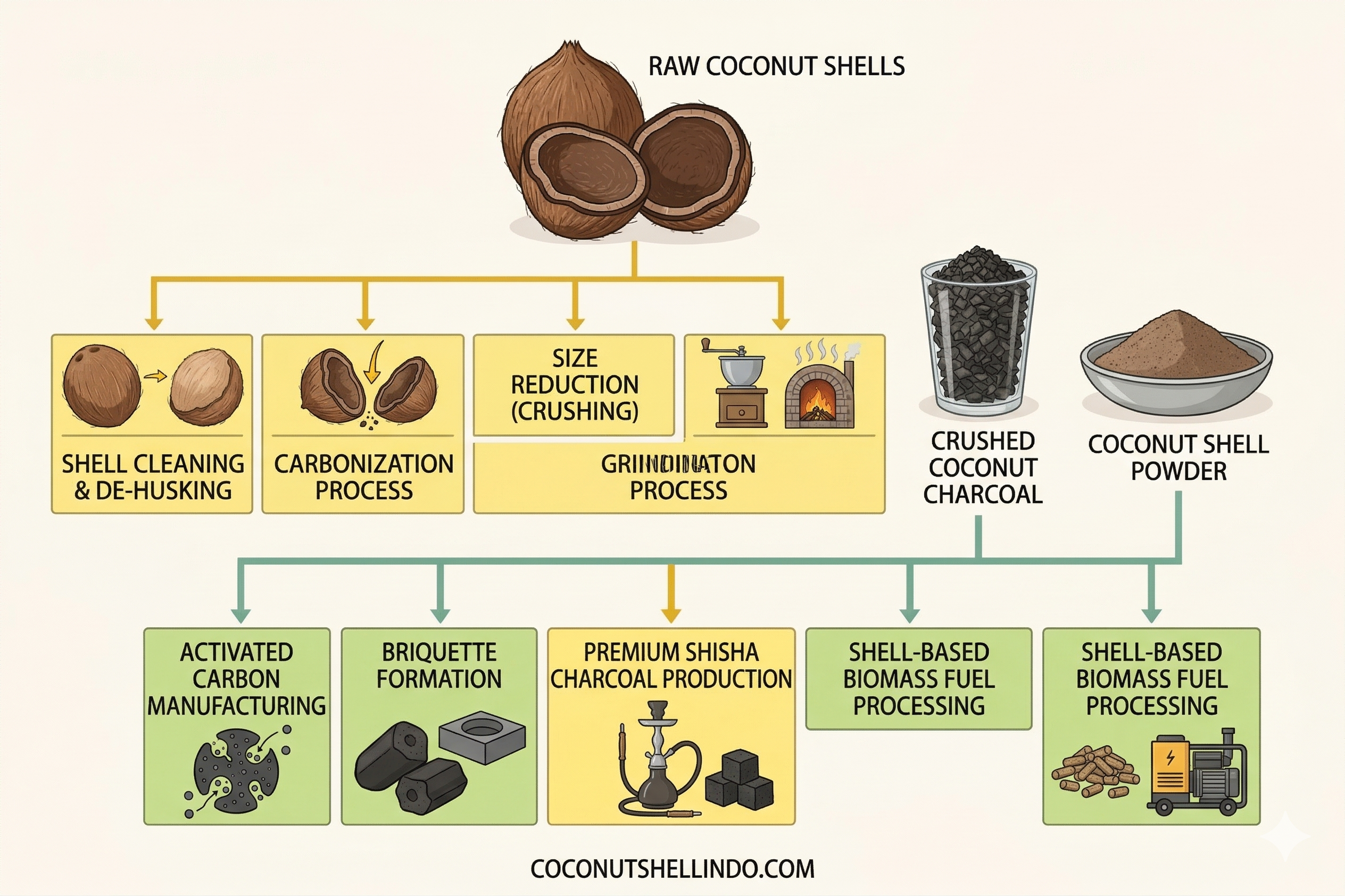
The process begins by sourcing coconuts from local plantations. We strictly select fully mature coconuts because their shells are thicker, harder, and yield higher fixed carbon when processed.
The shells are separated from the copra (meat) and the husk. We ensure that the shells are clean, minimizing any remaining coconut fibers or meat residue, which can cause smoke and lower the quality of end products.
Moisture is the enemy of raw material efficiency. Wet shells are heavier and cost more to transport, while also reducing the efficiency of carbonization kilns.
Our raw coconut shells serve as the foundational material for several heavy industries worldwide.
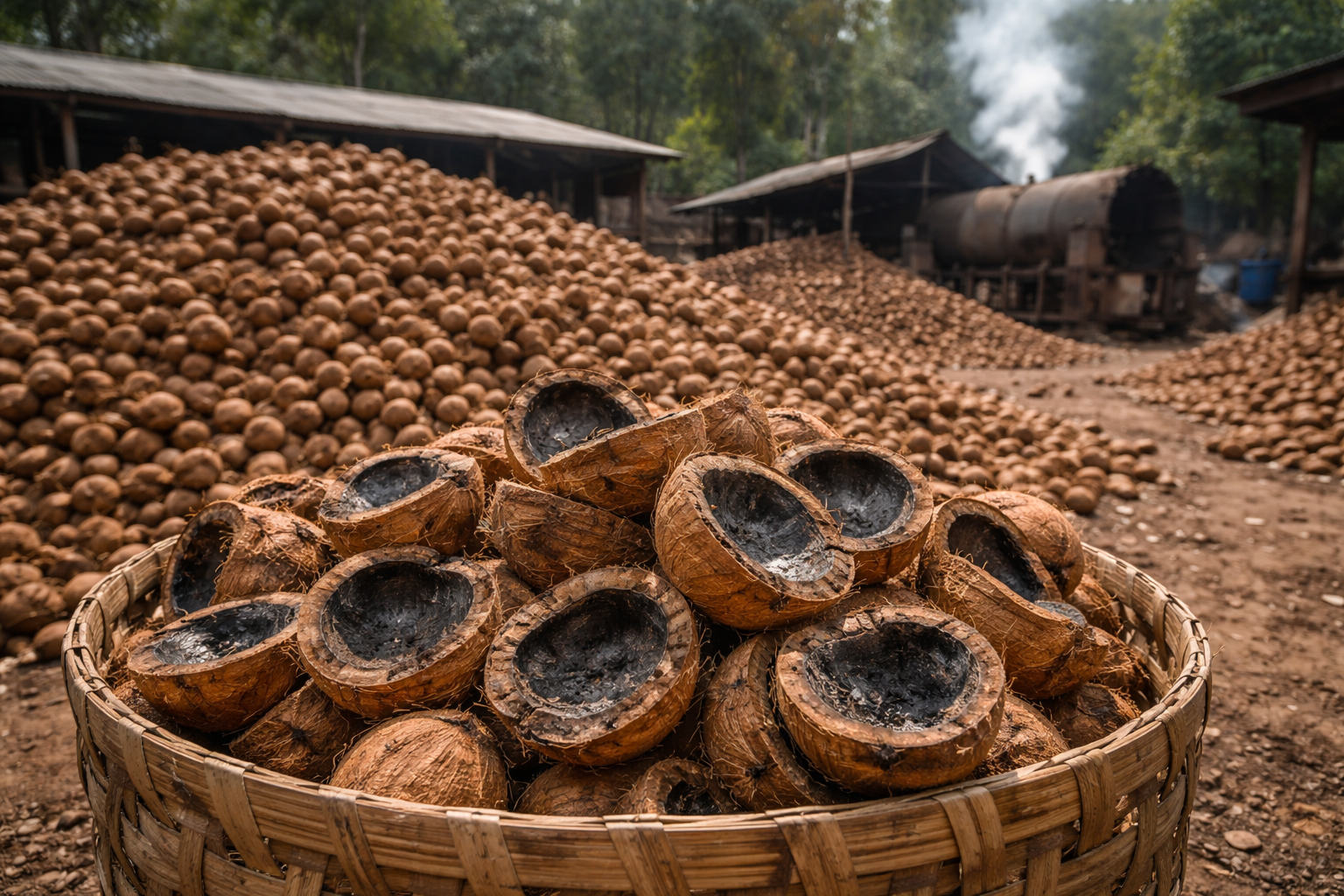
The high density and microporosity of mature coconut shells make them the absolute best raw material for steam-activated carbon and premium Shisha charcoal.
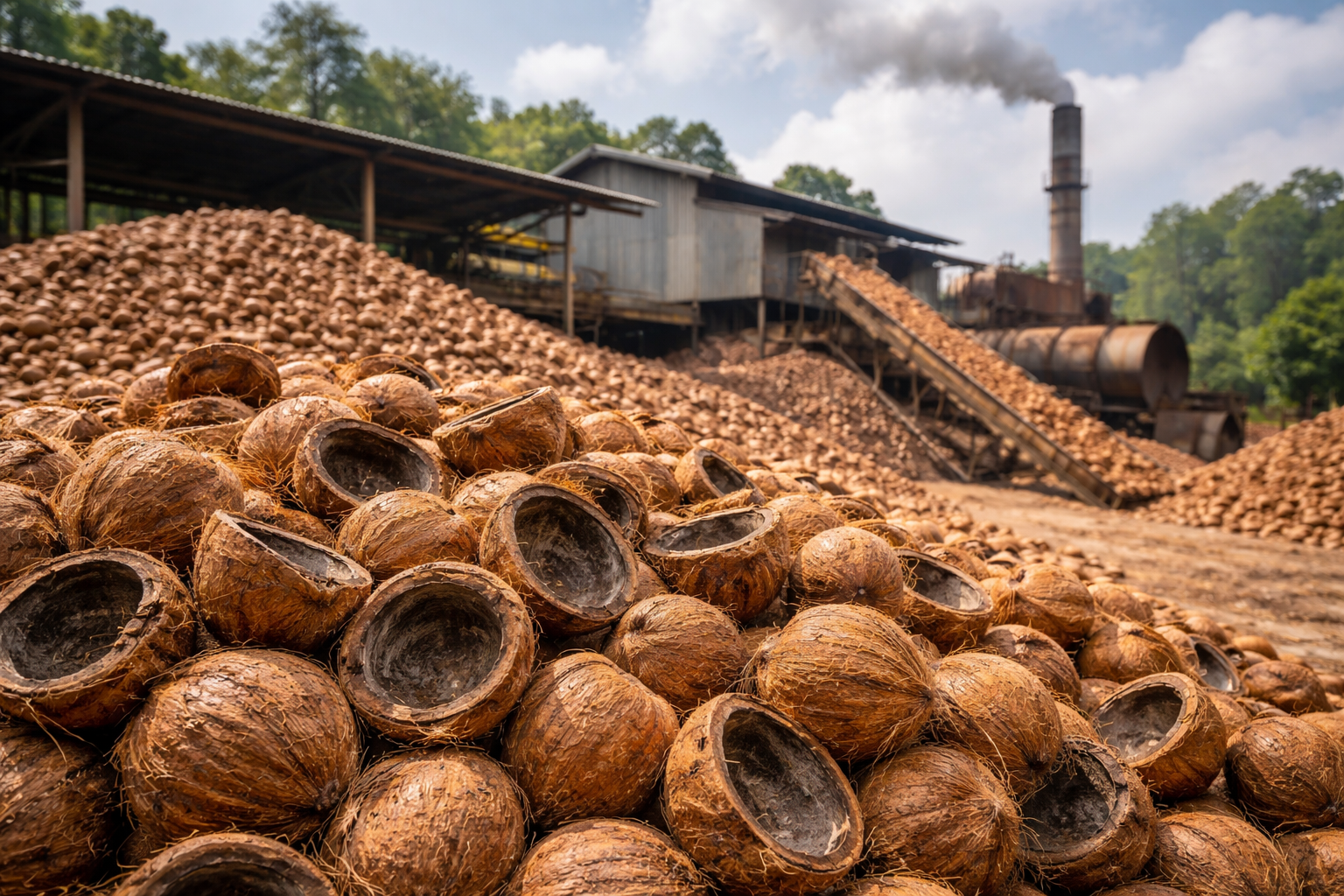
With a high calorific value and steady burning rate, crushed coconut shells are an excellent, sustainable biofuel for industrial furnaces and boilers.
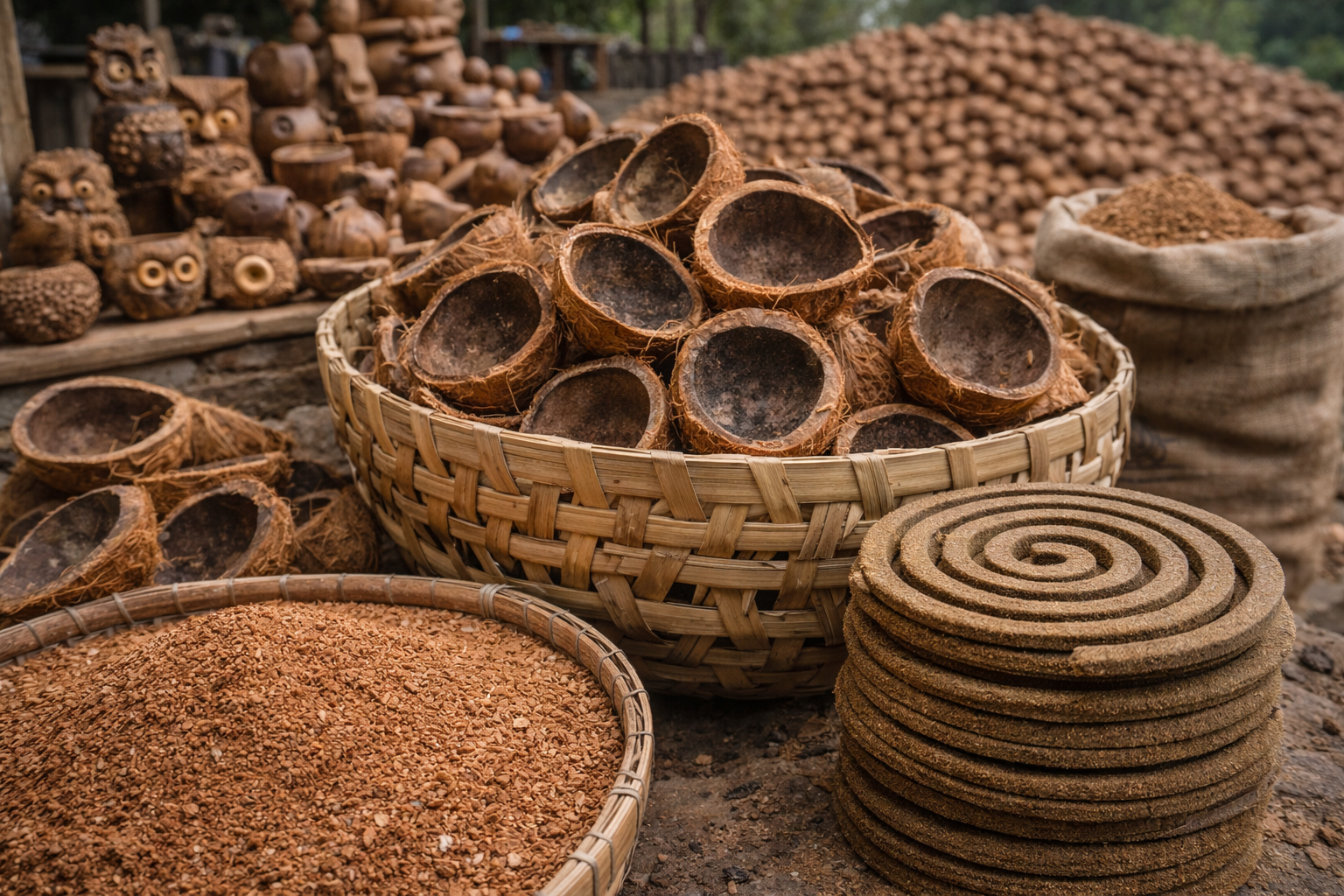
Coconut shell powder is widely used as a filler in mosquito coils, while whole halves are sourced for sustainable bowls, buttons, and artisanal crafts.
A quick overview of our raw coconut shell parameters.
A glimpse of our collection, drying, packing, and container loading process.
Aggregating shells from local farmers
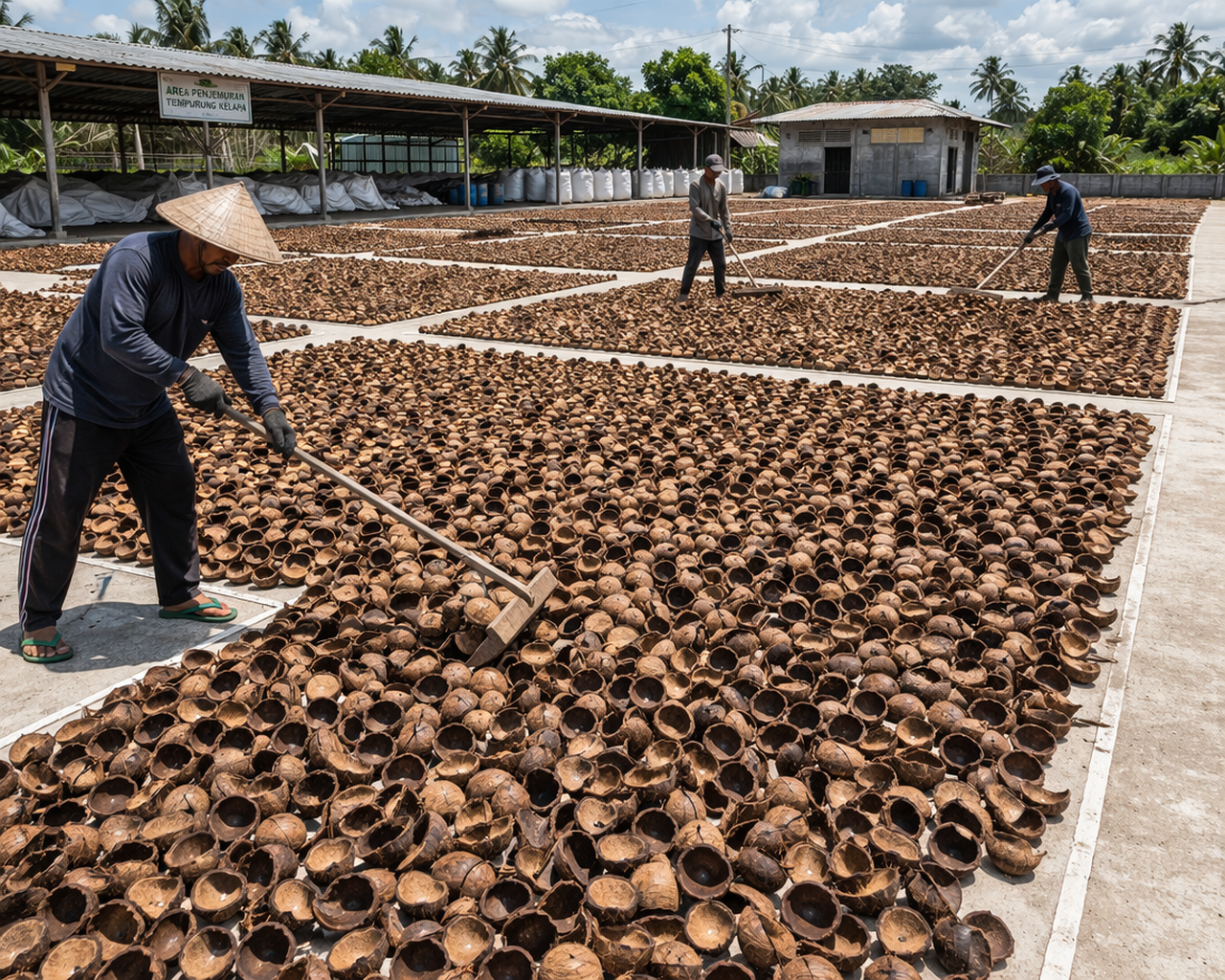
Extensive sun-drying process
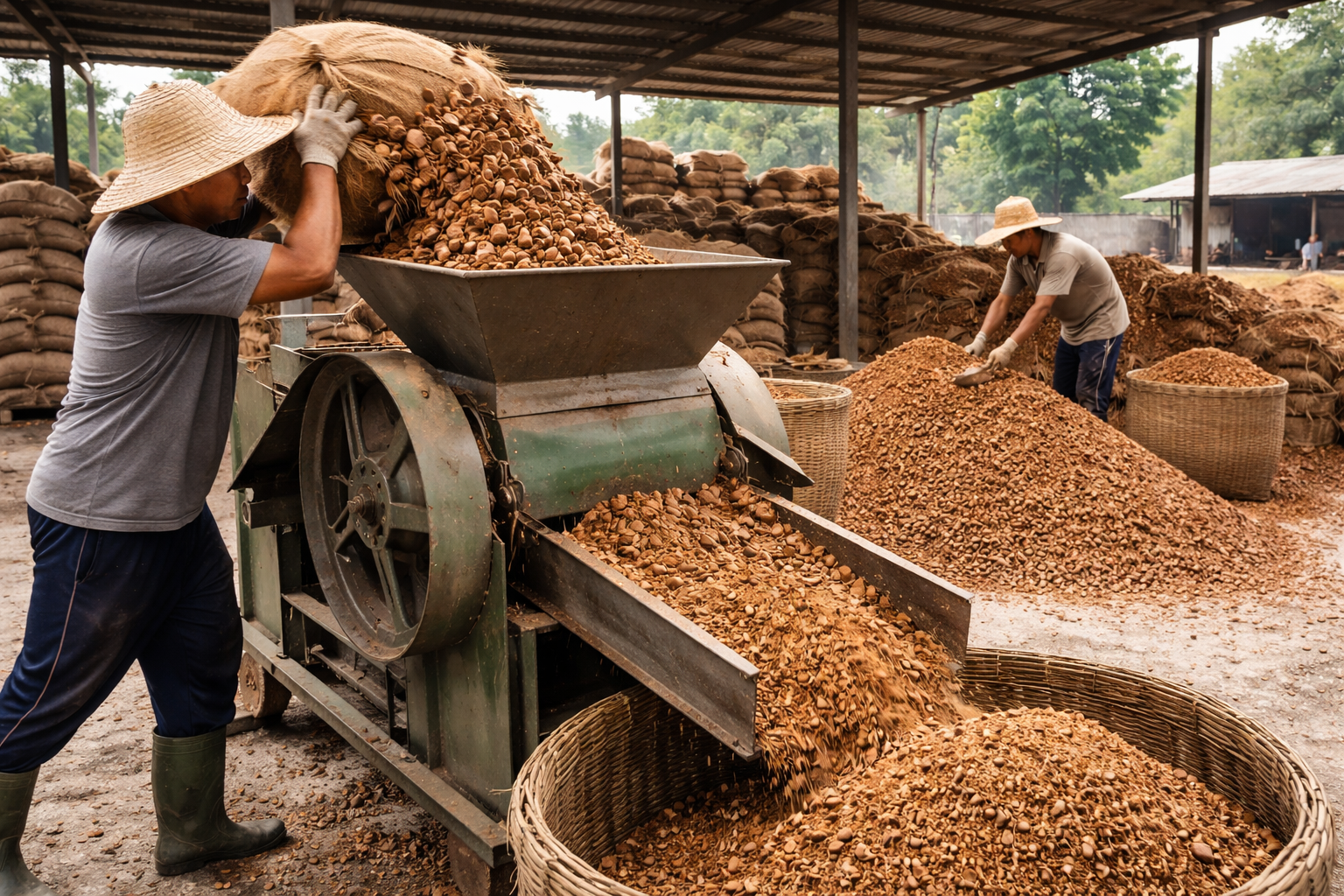
Manual sorting to remove impurities
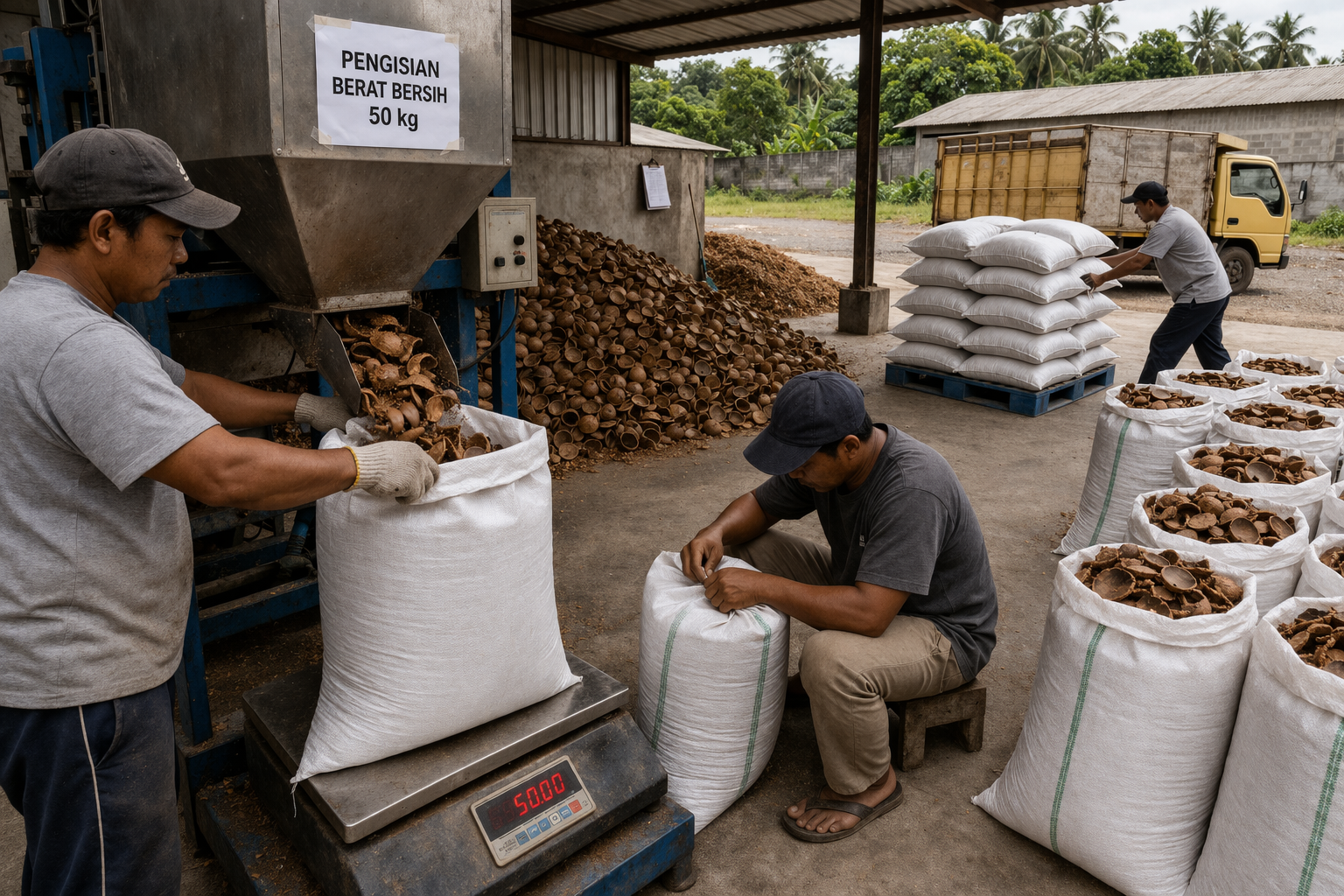
Packing into 50kg PP Woven Bags
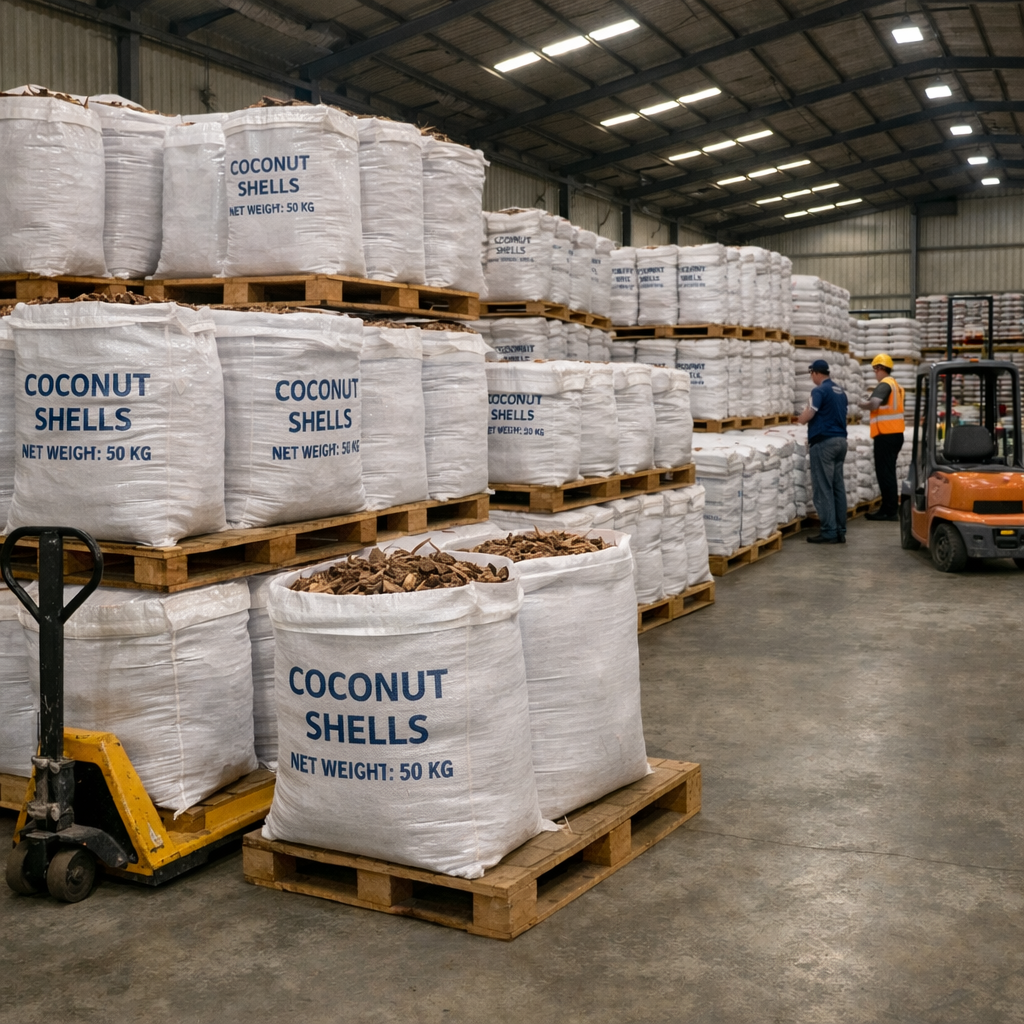
Dry warehouse storage
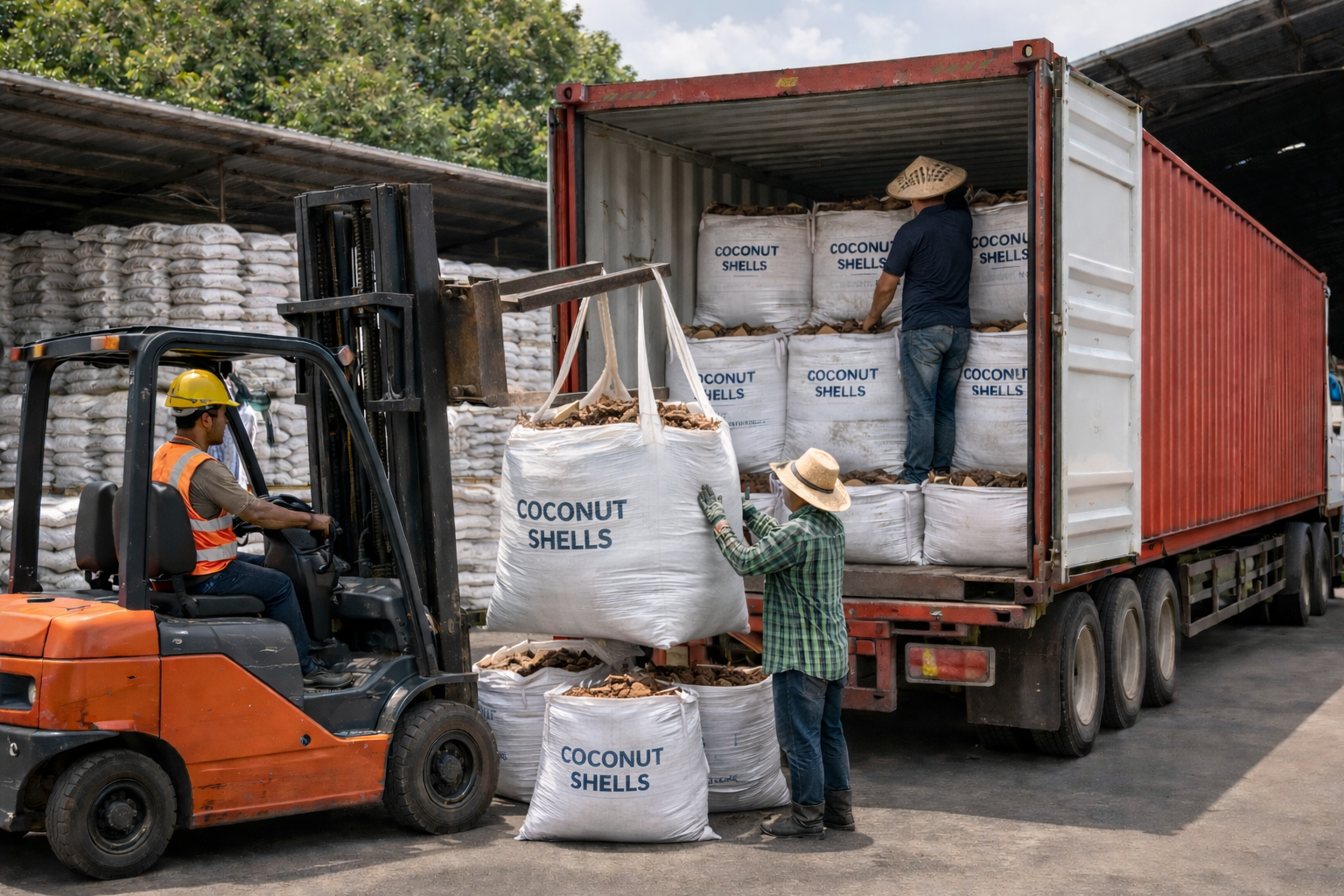
Bulk container loading
We primarily supply coconut shell halves. However, depending on buyer requirements and volume, we can also process them into crushed pieces of specific sizes to maximize container loading capacity.
Young coconut shells are thin, soft, and have low carbon content, making them useless for industrial applications. We strictly source fully mature nuts because their shells are extremely hard, thick, and yield a high percentage of fixed carbon when burned.
Our standard is sun-dried with a moisture content of around 12% to 15%. This prevents molding during ocean transit and ensures you are not paying freight costs for water weight.
Yes. While 100% removal is practically impossible in bulk agricultural commodities, we sort our shells to ensure impurities (like coconut meat residue and outer husk fibers) are kept below a maximum of 2% to 3%.
They are typically packed in 50 kg PP (Polypropylene) woven bags. This allows for easy manual unloading at the destination port.
A standard 40ft High Cube (HC) container can hold approximately 22 to 25 metric tons of coconut shells packed in PP woven bags, depending on whether they are halves or crushed.
Our MOQ is typically one 40ft HC container to optimize shipping costs for bulk raw materials.
Share your target application, required form (halves or crushed), expected moisture level, and monthly volume. We will provide our best FOB or CIF pricing.
Contact Us